Saturday, March 29, 2014

Mystery Spot

This week's post is a mystery photo, which should be no problem at all for natives of Rochester or those who are well familiar with Main Street.  How well do you know your town?

This photo was taken a few days ago from the sidewalk on Main Street, somewhere in the blocks between Third Street and University Drive.  In front of which store is this little stool to be found?  Post a comment and tell us where it is!

Saturday, March 22, 2014

At Home in Rochester: William Shulter Starring House

This house on the southwest corner of West University Drive and Wilcox Street has historical connections to two long-time Rochester businessmen. It was built in the summer of 1916 as the family home of Rochester druggist William Shulter Starring, who operated Starring's Drug Store at 321 S. Main St. from approximately 1887 until 1923. The Rochester Era newspaper reported in early June 1916 that Starring had broken ground for a new bungalow on West Fifth Street (now University Drive), and updated its readers a week later with the news that the basement of the new house had been completed. The Starrings moved into their new home in October 1916. After retiring from the pharmacy business, they sold the property in 1924 to another prominent Rochester businessman, Charles Louis Sterns, and his wife Rena.

Charles L. Sterns operated the Idle Hour Theatre on Main Street, and in 1936 remodeled it, installed a new Art Deco facade, and re-christened it the Avon Theatre. In 1942, with Rochester's demand for movie seats increasing, Sterns opened the  Hills Theatre on the opposite side of Main Street.  The Avon closed in the early 1950s and the Hills continued as Main Street's only movie venue until it went dark in 1984.

Rochester Avon Historical Society is currently working on a project to bring back the Hills Theatre. Read about the Society's progress in this story from this week's Rochester Post.

Saturday, March 15, 2014

Bygone Business: Four-O-Six Bar

As Rochester was emerging from the Great Depression in 1936, local resident Carl H. Hartwig bought out the Village Tavern - formerly known as the Merchant's Restaurant - which had been operating at 406 S. Main Street since 1927. Hartwig, who was the brother of Rochester real estate agent Max A. Hartwig, announced that he would open a new cocktail lounge and restaurant in the space after investing about $4,000 in new equipment and furnishings.

Hartwig announced his grand opening in the Rochester Clarion on September 18, 1936, informing local residents that the new establishment would be named the the Four-O-Six, presumably after its street address. The advertisement offered lunches for 45 cents and special “roadhouse dinners” for one dollar.

In 1952, restaurant owner Leonard Bebout needed to vacate his location south of the Opera House block and decided to move Bebout's Restaurant into the building he owned at 406 S. Main. As a result of that shuffle, the Four-O-Six moved up the block to 434 S. Main (thereby creating a local joke: “What's the address of the 406 Bar?”).

The Four-O-Six was known as a comfortable watering-hole where working men could enjoy a beer after the whistle blew at Twist Drill or Avon Tube. That image was tarnished by a tragic incident at the bar on September 26, 1971, when local resident William H. Spencer was shot and killed by another bar patron. As capital crimes were few and far between in Rochester, the murder at the Four-O-Six was the talk of the town and the story became permanently linked with the bar's name. The Four-O-Six closed its doors about two years later.

Saturday, March 8, 2014

A Main Street Timeline

Rochester is approaching its 200th birthday in 2017, and with two centuries of development in our rear view mirror, there is a lot of history to ponder along Main Street.  This handy timeline illustrates some of the milestones that Main Street has marked along the way. Click on any of the balloon markers to expand it and read more about the event. Some events may be collapsed to the bottom of the frame - just click on the plus sign to expand and view them.  There is even an historic video clip featured in one of the event balloons for your viewing pleasure, but you'll have to find it on your own!

Saturday, March 1, 2014

This Month in Rochester History

Clarence Bigger meeting his last passenger train in 1964
Half a century ago, in March 1964, the Rochester Clarion reported that 80-year-old mail messenger Clarence M. Bigger was out of a job.  Bigger was newly unemployed because the New York Central railroad had just discontinued passenger train service in Rochester.  The last passenger train pulled out of the depot on East University Drive on March 19, 1964, leaving Bigger without a job after 57 years of meeting every passenger train to send out or receive mail.  He had won the mail messenger contract in 1912 and had met every train - except for a handful of days of illness - ever since.  The Clarion related his story:
Except on Sundays when there is no mail delivery, and a few times when he was ill, Clarence has met every passenger train coming into Rochester. "Never once have I been late meeting one," he says with pride.

Abiding by postal regulations, he has been required to carry a gun, but has never once had to use it. Once, when accepting a large shipment of money here aboard a Detroit United Railway (DUR) car, he was surprised to learn that seven armed guards had put it aboard the car at Detroit. "I used to handle all the money shipped into the Rochester National Bank," Clarence recalled. "Some days there would be as much as 32 bags of silver."

The New York Central/Penn Central continued to run freight trains on the line through Rochester until 1976; at that time the line was abandoned and the old railroad bed became the Paint Creek Trail.

Saturday, February 22, 2014

Bygone Business: Bebout's Restaurant

For nearly four decades, Rochester residents who wanted to "dine out" likely bought their meals from one of the Bebout brothers, Harold, Clare and Leonard.  Harold Bebout started his career cooking in the town's pool hall, while in 1927 Clare took over the Merchant's Restaurant located in a newly-constructed building at 406 S. Main.  Those were heady days in Rochester - the South Hill bridge had just opened, bringing more automobile traffic into town, and business was booming. Not long after came the stock market crash and the Great Depression, and the restaurant closed, a casualty of hard times.

Harold Bebout rebounded in 1933 and opened a new restaurant, this time located in what was then the Nichols building (known today as O'Connor's Public House). During World War II, he also operated the employee cafeteria at McAleer Manufacturing on Water Street (now Rochester Mills Beer Company) and offered catering services.  Harold Bebout retired in 1947 and sold Bebout's Restaurant to his younger brother, Leonard, who had been cooking in the establishment since he was in high school. In 1952, Leonard moved the restaurant once again, back to 406 S. Main, where his brother had started out back in 1927.

One local resident recalled that a menu wasn't really necessary at Bebout's. A guest simply ate whatever Mr. Bebout, in his signature chef's hat and apron, happened to have on the grill that day, and paid whatever the waitress said was owed.  In May 1967, Leonard Bebout decided to hang up his hat and apron and go fishing, and that was the end of Bebout's Restaurant in Rochester. He's miss his friends, Bebout told the Rochester Clarion, but he was "just tired of cooking."

This 1961 photo of Bebout's Restaurant at 406 S. Main is from the Walter and Marjorie Dernier collection.


Saturday, February 15, 2014

At Home in Rochester: the Harry Bigger House

This house on the corner of West University Drive (formerly West Fifth Street) and Wesley Street was built in 1921 as the residence of Rochester clothing merchant Harry Bigger and his wife, Hazel. It was built in what was considered to be a prime location, situated along a stretch of West Fifth Street upon which many of Rochester's leading businessmen built their residences in the 1910s and 1920s.

Harry Bigger grew up in Rochester and joined clothier Louis Finsterwald as a partner in his store, located in the Masonic block at Fourth & Main streets.  Eventually, Finsterwald decided to return to Detroit and in 1921 Harry Bigger bought him out of the Rochester store, becoming sole proprietor of the business then named Harry Bigger Men's and Boys' Wear.

The new house on the corner of West Fifth & Wesley was built in the autumn of 1921, and the Biggers occupied it for a little over a decade. In 1933, they decided to move to Detroit and they rented the Rochester house for a few years, until finally selling it in 1941.

Saturday, February 8, 2014

Bygone Business: Case's Hardware

C. W. Case (right) in front of his store about 1905 (Rochester Hills Public Library)
A Main Street fixture for well over three quarters of a century, Case's Hardware stood at 335 S. Main from 1890-1968, but the company's roots in Rochester go back even further.  The business that most twentieth century residents of Rochester knew as Case's began in 1872 when a Civil War veteran named Joseph Reimer opened a hardware store on the east side of Main. In 1885, Reimer built a brand-new brick building to house his store at 418 S. Main (the location of today's Sumo Sushi restaurant), and shortly thereafter retired and sold the hardware to his son, Cyrus. Cyrus ran the store with the help of his partner and brother-in-law for a while, but was busy working out of town as a traveling representative for an implement manufacturer, so he sold his Rochester hardware to Harvey J. Taylor in 1888.

Taylor, who quickly decided that he did not want to continue paying rent in the Reimer building, began to scout around for a new location and settled upon a lot across the street and down a block, at 335 S. Main. Here he built a two-story brick structure in 1890, with a salesroom on the first floor and warehouse space and a tin shop on the second floor.  For the next half-century, the second-floor metal shop would be the domain of tinsmith Alexander Rose.

In 1889, just before the construction of his new building, Taylor had hired his sister Charlotte's young son, Charles Wallace Case, to work in the hardware store. Fresh off the farm and nineteen years old,  C. W. Case learned his uncle's business and ten years later, in 1899, formed a partnership with H. Frank Stone to purchase the Taylor store.  At that time, the business became known as Stone and Case, but after only a few months Stone sold his interest in the store to William Tienken, and the firm changed its name to Tienken and Case.  When William Tienken decided to go into the plumbing and heating business on his own in 1915, Case bought him out and the store became known as the C. W. Case Hardware. Meanwhile, William Tienken built a new store right next door at 333 S. Main to house his plumbing and heating business.

C. W. Case was a civic-minded merchant who served as Rochester village president and held a number of other political offices.  He was also well known for one of his best-loved hobbies, that of raising purebred poultry.  In 1912, he received international attention when his pair of purebred Buff Cochins won a championship for pairs held at Madison Square Garden in New York.  He proudly displayed a picture of this winning pair of chickens on the wall of the hardware store for many years.

Case operated the store until his death in 1944, but by that time his son, Mason, had taken over as manager because of the elder Case's declining health.  Mason Case succeeded his father as owner of the hardware store and the business remained in family hands until the building was destroyed by fire on December 12, 1968.

In its day, Case's filled important needs for the citizens of the Rochester area. The service provided was personal; my father recalls that if he needed three nails, he could go to Case's and they would happily sell him three nails, not a box of 100. Case's Hardware belonged to an era when merchants concentrated on serving customers more than on moving merchandise, and for that it is ever fondly remembered.

Saturday, February 1, 2014

This Month in Rochester History

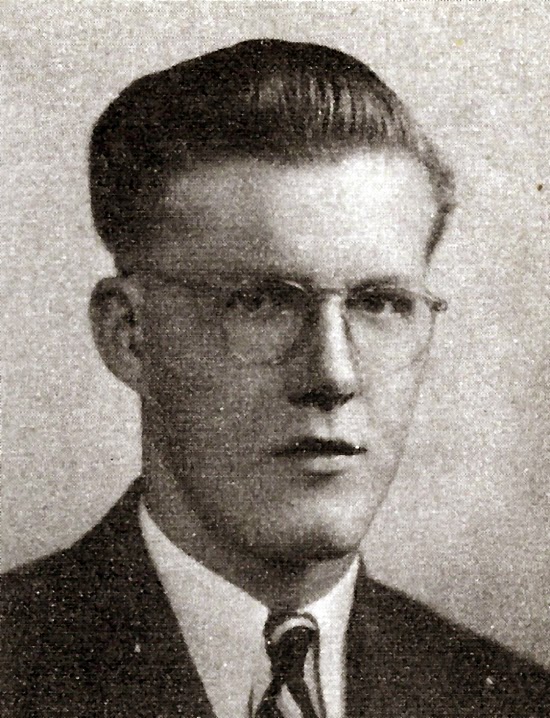
Fifty years ago this month, Rochester was mourning the death of Rochester native Sgt. William Eugene Jackson, who died from wounds suffered while serving in Vietnam on February 5, 1964.  The first Rochester resident to lose his life in the Vietnam War, Sgt. Jackson was the son of John W. and Elizabeth A. Jackson. He had deep roots in Rochester; his great-grandfather was William H. Jackson, who had established the Jackson Foundry at the south end of town in 1877.  William Eugene Jackson was a 1946 graduate of Rochester High School and had been a member of the United States Army since shortly after completing high school. He had also served as a radio instructor at the United States Military Academy at West Point, New York.

Sgt. Jackson was in Vietnam as a Special Forces senior military advisor to Vietnamese soldiers at a mountain camp north of Saigon. When the camp was attacked by an enemy patrol, Jackson ran out to investigate and someone threw a flare to illuminate the area. The Vietnamese soldiers in Jackson's camp,  apparently confused by the attack and the sudden light from the flare, shot him in a tragic friendly fire accident. Jackson was evacuated to Clark Air Force Base in the Philippines, where he died after a series of surgeries and blood transfusions failed to stabilize his condition.

Sgt. William E. Jackson of Rochester, first local fatality in the Vietnam War, was laid to rest with honor in Arlington National Cemetery.  May he rest in peace.

Thanks to Rod and Susan Wilson for providing the copy of William Jackson's RHS high school graduation photo that accompanies this post.

Saturday, January 25, 2014

Subdivision Stories: Hamlin Place Farms

The Hamlin Place Farms subdivision was laid out on the north side of Hamlin Road, straddling Rochester Road, in late 1916.  It was located on a portion of what was historically the John Fairchild Hamlin farm, a pioneer farmstead in Avon Township since the 1830s. The Hamlin farm at its peak encompassed more than 500 acres; after the death of John Fairchild Hamlin and his wife, Laura Andrus Hamlin, ownership of the property passed to his daughter Belle, who was the wife of Judge Marsden C. Burch.

The Burches did not live in Avon Township on a full-time basis. Marsden Burch was a judge in Osceola County, Michigan, and later located in Grand Rapids, where he was U.S. District Attorney for the western district of Michigan. In 1897, President William McKinley appointed him an assistant Attorney General of the United States, and he and his wife moved to Washington, D.C.  They visited Rochester regularly to look after their farm interests, which were managed by tenants, and to vacation during the summers in the old Hamlin homestead, which they affectionately called "Oldhome."

The Oldhome property was reserved for the Burches' use when they sold off portions of the old farm for development, and the Hamlin house in which they lived until their respective deaths still stands at 1812 S. Rochester Road. The one and only side street in Hamlin Place Farms ran north from Hamlin Road, west of Rochester Road, and was called Burch Street for the property owners; it was renamed Crestline in 1950.

This 1917 advertisement for the lots in the Hamlin Place Farms subdivision refers to this portion of Avon Township as "Rochester Heights." It also makes reference to deed restrictions which were fairly common during this era, usually prohibiting sale of lots to people of color or to people of certain religious beliefs. Deed restrictions based on race or religion were widely used to enforce segregation in the days before federal law prohibited such discriminatory practices.

Thanks to Rod and Susan Wilson for providing the Hamlin Place Farms advertisement shown here.

Saturday, January 18, 2014

Rochester Relics: The Elbe E. Robson Story

According to its label, this palm-sized antique bottle was once given out as a party favor during the 1901-1902 holiday season by E. E. Robson of Rochester, Michigan. The bottle is empty now, and not a trace of its former contents remains after 113 years, but we can be fairly certain that it once held holiday cheer in the form of liquor. Robson's back story as a player in a local controversy suggests no other possibility.

Elbe E. Robson was born in Michigan in 1865. He came to Rochester around 1899 to take over as proprietor of the Detroit Hotel, which stood on the southwest corner of Third & Main streets (where the Hermitage Gallery is today). The hotel was a handsome two-story brick building that boasted 30 guest rooms, a dining room, a bar and billiard lounge.

As one who made his living in the hospitality trade, Elbe Robson was an ardent advocate for the rights of saloonkeepers to sell liquor unfettered by government regulation. He apparently challenged such regulation early and often; Robson wasn't long in Rochester before he got himself into trouble with the law. According to a Detroit Free Press account from August 1900, he was one of four Rochester men fined for selling liquor without a license. In December of the same year, the Free Press reported in a dispatch from Pontiac that there had been more trouble:
The December term of the Circuit Court opened here yesterday afternoon and a lively session is promised. The criminals were arraigned at 1:30 p.m. Elbe E. Robson, of Rochester, proprietor of the Detroit Hotel, paid a fine of $200 upon pleading guilty to a charge of selling liquor on Sunday. He was also assessed $10 costs. On two other charges he was released on his personal recognizance in the sum of $300, in each case, until the February and April terms of court.
His hefty fines aside, E. E. Robson was in for a rocky ride in the first decade of the twentieth century. Back in 1889, Michigan had passed a liquor control law in Public Act 207, commonly referred to as the "local option" law. Under this act, individual counties were permitted to outlaw the manufacture and sale of intoxicating spirits within their borders upon a vote of the people, which could be petitioned for not more often than every two years. In Oakland County, agitation by temperance organizations was beginning to bubble to the surface right around the time that E. E. Robson was handing out these little bottles of cheer, but it was successfully beaten back by the "saloonists" until 1908.  In that year (the same one in which Carry Nation made her famous romp through downtown Holly), the temperance forces petitioned for a ballot question on the issue, and Elbe Robson stood in the gap to defend the saloonkeepers.

Elected as chairman of an executive committee of the county's saloonkeepers' organization, Robson traveled around advocating against the exercise of local option in Oakland County.  Just before the election, he gave an interview to the Bay City Times, which the newspaper summarized thusly:
E. E. Robson, proprietor of the Detroit Hotel at Rochester, and the most salient factor in the concerted movement instigated by the liquor element of Oakland County to oppose local option, was a guest of the Crawford today. This noon in a brief interview he outlined the situation as it now lies in his county, closing with the declaration that it would be a battle to the last ditch between the advocates of the licensed liquor traffic and the supporters of the local option cause.

As it turned out, Robson was right to be less than optimistic about the outcome of the election. His faction lost, and Oakland County went "dry" in the spring of 1908. The Detroit Free Press reported in late May of that year that Robson, weary of the fight, had closed the Detroit Hotel and moved to Richmond, Michigan.  Richmond was in Macomb County, which was still "wet," so Robson operated the Commercial Hotel there for two years, until 1910, when the temperance advocates were reversed at the polls and Oakland County went "wet" again.

This time, Robson went by the book and applied to the Rochester Village Council for a proper liquor license. The application was not without controversy, as opponents pointed out the proximity of the Universalist Church (at 226 Walnut) to the hotel. The hotel and the church did, indeed, share a property line, but measurements were taken and it was determined that the two buildings were precisely 400 feet apart, the minimum requisite distance under the law at that time, so the village fathers granted the liquor license.

The seesaw battle on the issue continued over the next several years, and Oakland went dry again in 1915. In 1918, statewide prohibition was voted in Michigan, and by 1920, the entire nation was (technically) dry. E. E. Robson threw in the towel and moved to Detroit, where he and his wife went into a completely different business and operated a millinery store.  He died in November 1933, exactly one month before national prohibition was repealed and liquor again became legal in the United States.

My thanks to Rod and Susan Wilson for the photo of the bottle that accompanies this post.


Saturday, January 11, 2014

At Home in Rochester: The William Henry Ducharme House

This Dutch colonial on Crooks Road, just north of Hamlin, has ties to the history of the American automotive industry. According to WPA rural property inventory records, the house may have been built about 1899, but the exact date is currently unknown. The house stands on the remnant of what was once a large farm parcel straddling Crooks Road and consisting, at times, of more than 200 acres.

The most interesting part of the property's history began in 1916, when it was purchased by William Henry Ducharme of Detroit. Ducharme was the son of Detroit hardware merchant Charles A. Ducharme, who was a partner in the Buhl & Ducharme hardware business and was also president of the Michigan Stove Company. William Ducharme was a talented amateur athlete and active member of the Detroit Athletic Club; he played first base for the D.A.C.'s baseball club, known as the Deltas. He was a member of that team when they won the national amateur championships in 1890 and 1892.

In business, William Ducharme had started out in the hardware trade, like his father, but in 1909 he became one of the three organizers of the Kelsey Wheel Company and was elected treasurer of the new firm. Kelsey Wheel got its start from Henry Ford, who purchased more than three-quarters of the company's wheel production in the first year. The company later expanded sales to other automakers and to the federal government during World War I, and by 1919 was producing two million wheels a year.  In 1927, Kelsey merged with the Hayes Wheel Company and formed what became the Kelsey-Hayes Corporation, a major supplier of wheels and brakes to the Big Three automakers.

With Kelsey Wheel making great strides in the industry, William Ducharme decided to invest in real estate. He purchased the Crooks Road property in 1916 from William McKinstrey and apparently used the house as a country escape.  The 1922 Detroit Social Secretary lists Ducharme and his wife, Frances, as residents of Jefferson Avenue in Detroit but notes that they maintained a "country home" in what they referred to as "Avon Hills."

Ducharme owned the Crooks Road property until 1943, a year before his death, but by 1939 he was apparently leasing the house for use as a convalescent home.  The Rochester Clarion reported on May 19, 1939, that the house was damaged by fire while so occupied:
The River View Rest Home, operated by Jerry Cummins and Robert W. Brennan at 1921 Crooks road, about 3 miles west and two miles south of Rochester, was badly damaged by fire, Monday afternoon, about 2:45 p.m., when a fire started in the attic of the house and before Rochester firemen could get it under control had burned the top floor of the sanitorium.
It is believed the fire was caused by sparks from a hole in the chimney. Firemen were handicapped in fighting the blaze for lack of water. The well on the property had gone dry and was being repaired by John Boldt, who gave assistance in getting the patients from the Home before help arrived. Firemen exhausted the chemicals in attempting to extinguish the blaze and a hose line was run 800 feet to the Clinton River and pumped to supply water.
At the time of the fire, nine patients were registered at the Rest Home. One of the women patients had suffered a stroke two days previous and had to be carried from the home. She was transferred in the A.C. Hobart ambulance to the Woodruff-Geiger Hospital. The other patients were taken to The Haven, another private sanitorium west of the village, and to the home of Mrs. Leila Mitchell on East Fifth street. Mrs. Mitchell is a nurse at the River View Rest Home.
The property is owned by William DuCharme, of Detroit. He will repair the home immediately for its continued use as a convalescent home.
 Another newspaper article a few months later reported that the house had been repaired and the rest home was back in operation, but after Ducharme sold it in 1943 it returned to service as a private residence.  Most of  the surrounding farm land was sold for development following World War II.

Saturday, January 4, 2014

The Story of Tyrrell H. Duncombe

This collectible old bottle has a connection to Rochester, Michigan and an intriguing back story. The product known as "Germex" was manufactured in Highland Park and Rochester, Michigan by Tyrrell Hubert Duncombe, who ran the Duncombe Research Laboratory in both locations from the late 1920s until his death in 1945.

Duncombe was born in Ontario in 1867, the son of a prominent physician and Canadian member of parliament. From 1889 until 1910 he was a pharmacist in St. Thomas, Ontario, where he also ran a real estate business.  Duncombe built the New Duncombe Opera House in St. Thomas and there exhibited the first motion pictures ever shown in Canada.

In 1910 he moved to Detroit, and by the late 1920s was a resident of Avon Township (now Rochester Hills), living on Washington Road.

Tyrrell Duncombe was a prolific inventor and was issued many U.S. and Canadian patents. Among them were patents for an acetylene gas generator in 1902, a coin-operated vending apparatus in 1910, a rotary internal combustion engine in 1921, and a traditional fuselage airplane with helicopter capabilities in 1930.

In addition to his mechanical inventions, Duncombe also styled himself  a cancer researcher, and he ran afoul of the U.S. Federal Trade Commission in 1935 when his claims that his Germex product was an effective treatment for cancer and other diseases fell under the agency's scrutiny. In a 1937 finding and summary of the investigation into Duncombe's case, the FTC cataloged the following claims that had been made by him in advertising for Germex:
Represented that cancer cures attained by said preparation were "beyond  all comprehension," and that it was a cure for syphilis, arthritis, pernicious anemia, and gangrene, and a remedy for tuberculosis, and that notable results were being obtained by use thereof in such diseases as cancer, sinus, catarrh, etc., and that it was used most successfully for various other diseases and was recommended for or effective in various other ailments, including kidney and liver trouble, pyorrhea, etc., and variously recommended same as a competent cure and remedy for everything that local doctors are called upon to treat and for any diseases caused by parasites or bacteria, and made use of circulars and other literature containing purported testimonials by various people to the effect that they had been suffering from cancer, ulcers and other diseases and had been relieved or cured thereof or completely restored to health by use of said preparation. . .
In his biographical entry in the National Cyclopedia of American Biography, Duncombe claimed that he had been graduated from "Ontario College of Pharmacy in 1889, M.D. at Rush Medical College, Chicago, in 1893 and D.C. at Chiropractic College, Detroit, Mich., in 1912."  The FTC investigation, however, took issue with his educational claims and described his credentials thus:
Although respondent is, or at one time was, a pharmacist, he is not registered as such in Detroit or Wayne County, Mich. Respondent never took a course in medicine and holds no degree in medicine. Respondent, however, in written communications prescribing and selling "Germex" has signed himself "Dr. T. H. Duncombe." Respondent explains that he uses the word or title "Dr." because he is a chiropractor. When questioned in regard to chiropractic, respondent was unable to state accurately the number of vertebrae in the spinal column.
The FTC further asserted in its findings that Duncombe had no substantive knowledge of the conditions that he claimed Germex could treat:
Respondent never read, nor could he give the name or title of any book on the subject of arthritis, anemia, syphilis, trench mouth, or scarlet fever. Respondent could name no book or article he had ever read on septicemia, gangrene, ulcers, diabetes, tuberculosis, or other diseases enumerated in his advertising material.
Notwithstanding the fact that respondent is not a doctor and is without medical education, he has not hesitated to consult with patients, to undertake to diagnose their troubles and to prescribe his product, "Germex" for them.
So what, exactly was Germex? The chemical analysis conducted by the FTC investigators found that:
Bacteriological examinations of "Germex" disclose that it is not an antiseptic, is not sterile and contains pathogenic or disease-causing bacteria.
. . .
Chemical analyses of a sample of ''Germex" as made by the Laboratories of the Detroit Department of Health disclosed the product to be a brown liquid, cloudy in appearance, with a yellowish residue on the bottom and a scum on the surface of the liquid standing in the bottom. The sample contained 8.18% of ethyl alcohol by volume, a deficiency of .82ff. had a musty odor, a slightly acid reaction, small amounts of resin and glucocides, total solids of .97'i of this .147, representing a composition of ash, largely sodium carbonate, and a trace of potassium carbonate.
Unimpressed, the FTC in 1937 issued a "cease and desist" order against Duncombe and the Duncombe Research Laboratory with respect to the sale and distribution of the product known as Germex. Tyrrell H. Duncombe died eight years later. He is buried in Mount Avon Cemetery.

Thanks to Rod and Susan Wilson for the photo of the Germex bottle.

Wednesday, January 1, 2014

This Month in Rochester History

As we turn the calendar page to 2014 today, we also look back at what was happening in Rochester half a century ago, in January 1964. The headline news in the Rochester Clarion at that time was the dedication of the new chapel at University Presbyterian Church on Adams Road, which took place on January 20, 1964. The congregation had been organized in 1958 and met in Lawnridge Hall, the former home of Donald C. Wilson, brother of Alfred G. Wilson of Meadow Brook Hall. Once their new chapel was dedicated, the congregation used Lawnridge Hall for administrative and educational functions. It is still a part of their campus today.

In its coverage of the dedication plans, the Clarion described the new building this way:
The chapel seats 180 people around three sides of a raised chancel supporting the pulpit and gleaming white marble communion table. From the skylit peak of the 40 foot ceiling, a celtic cross hangs suspended above the chancel. Behind the chancel, the choir is grouped around the Alfred G. Wilson Memorial Organ.
A few months after the building was dedicated, it was selected from among 275 entries as one of the top ten church building designs in the United States by the National Conference on Church Architecture.

Saturday, December 28, 2013

Bygone Business: Pierson's Floor Covering

The storefront at 410 S. Main Street received a new tenant in the spring of 1964, after having served more than three decades as the home of a shoe store (first Hale's, then Leinenger's). The new store was Pierson's Floor Covering, and it held a grand opening on April 3 and 4, 1964. Operated by Arthur C. Pierson, who had been in the floor covering business in Detroit, the shop sold duPont paint, Armstrong linoleum and carpeting.  To introduce his store to Rochester residents, Pierson offered a child's fishing pole and reel to the first one hundred customers to visit the shop on opening weekend. Pierson's closed around 1971, and the Rochester Eccentric newspaper offices replaced it at 410 S. Main in 1972.

The ad shown here ran in the Rochester Clarion in April 1964 to announce Pierson's grand opening. Do any of you have one of those kiddie rod and reel outfits stuffed in a closet somewhere?

Saturday, December 21, 2013

Subidvision Stories: Rochester Heights

The Rochester Heights subdivision was platted on former farmland northeast of the village of Rochester in 1956.  Since 1913, the 30-acre parcel that was subdivided had been part of the William Korff farm, and for most of the 19th century it was part of the large holdings of the Lysander Woodward family. Rochester Heights was part of a post-war building boom in the area that sought to meet overwhelming demand for housing as World War II vets who had finished their college degrees on the GI Bill looked to move into the northern suburbs. The Rochester Clarion announced the new subdivision in August 1956, reporting that the ranch homes in the development would be built by the Jack Hyman Building Company of Detroit, while sales would be handled by White Brothers of Waterford.

The opening of the home sales was done in a spectacular way. When the model homes were ready for public inspection, free helicopter rides were offered to show off the new development. The Clarion reported than more than 1,500 people turned out for the grand opening and about 150 took the aerial view:
About 150 persons took helicopter rides and there were rides on giant earth movers for the youngsters and refreshments for all.
Clarence Burr, village president, cut the ribbon at the door of one of the models to formally open the affair Saturday and for two days a steady stream of people moved though the models. Comment was high favorable and several homes were sold on the spot by White Brothers, of Waterford, who are handling sales.

Streets in the Rochester Heights subdivision are all named for trees. In 1957, an addition to the subdivision was made on the north end, connecting it to the existing North Hill Gardens subdivision via Red Oak Lane.

Saturday, December 14, 2013

Bygone Business: Buzzell Shop

It's hard to visualize today, but the former D & C building on the corner of Fourth and Main (occupied today by the Rojo Mexican restaurant) used to house more than one business in the space.  Tucked in to the back end of the building near the alley was The Buzzell Shop, a ladies' dress store located with the address of 113 W. Fourth Street. The business opened in August 1940 and operated for twenty years, closing in January 1960. It was operated by Neil D. Buzzell and his wife, Pearl, who lived in Bruce Township, near Romeo.

Here's a local newspaper ad from a 1951 issue of the Rochester Clarion, featuring a dress that was "big fashion news" for $14.95.

Saturday, December 7, 2013

At Home in Rochester: John B. Oliver House

Available evidence suggests that the brick Victorian house at 324 East Street was built about 1865 for a man named John B. Oliver. Oliver was born in France in 1794 as Jean Baptiste Olivier, and sailed with his family to America in 1828 aboard the ship La Leonarde. He settled in Rochester before the Civil War and owned a number of parcels of land on the east side of Main Street; in fact, on some early maps of the village, that which we know as East Street is marked as Oliver Street.

John Oliver was a cabinetmaker by trade, but the most interesting fact about his life comes from the 1877 History of Oakland County, Michigan, which tells us that he was one of only two veterans of the Napoleonic Wars living in the county at that time.

Oliver's house and lot on East Street was sold to Nehemiah and Mary Ralston, emigrants from Northampton County, Pennsylvania, in 1866. The Ralstons remained in Rochester only a few years and sold the house to local merchant Abram Horn in 1872. Horn, in turn, sold the house to James and Catherine Riggs, and following the Riggs family, the house was owned by Orestes Millerd.  For most of the early part of the twentieth century, however, 324 East was owned by the Hadden family, who purchased it in 1904. In 1944 the house was converted to a nursery school, thus ending its service as a private residence.

Oscar Sorenson bought the house in 1969, painted it blue, and operated it as a private museum and antique gallery called "Wedgewood Hall." Sorenson also built an addition on the back of the house to replace an old summer kitchen.  In the years since, the house has been the location of several small businesses, and is now the headquarters of Kosch Catering.

The John B. Oliver House is approximately 148 years old this year. More details about the history of the property are available on the Oakland Regional Historic Sites web site, here.

Sunday, December 1, 2013

This Month in Rochester History

Rochester Falconettes Parents' Club float, 1981 parade (courtesy of Clarence and Dorene Whitbey)
Fifty years ago this month, the citizens of Rochester were doing what they had been doing during the first week of December for over a decade - looking forward to the annual Christmas Parade. Next Sunday afternoon, the Rochester Regional Chamber of Commerce will present the 62nd annual Christmas Parade and a new generation of Rochester's families will be enjoying the tradition.  So now is the perfect time to look back at some Christmas parades past. Readers, I've pulled out a few vintage views to spark your memories. If you have Rochester parade photos in your own family collection that you'd like to share, e-mail them to rochesteravonhistory@gmail.com and I'll add them to the post for everyone to enjoy.  Add your memories of the parade to the comments section as well!
Bagpipers in Christmas Parade, ca. 1954 (Courtesy of Erv and Dorothy Bauer)

West Junior High band in the parade, ca.1967 (courtesy of Clarence and Dorene Whitbey)

Parade float, ca.1967 (courtesy of Clarence and Dorene Whitbey)

Saturday, November 30, 2013

Christmas Shopping in Rochester

This week's Black Friday-backed-up-into-Thanksgiving Day retail frenzy has given me pause to reflect upon the Christmas shopping habits of my family during my youth in Rochester. In our family, Christmas gifts were far from extravagant - a modest toy for a child, a useful object or item of clothing for an adult. That's not to say there weren't plenty of gifts under the tree in my family home - there definitely were. It's just that my parents, and the parents of others I knew, didn't go into hock for the rest of the year to underwrite their holiday largesse. Purchases weren't funded with credit cards; most families in my circle of acquaintance probably didn't even possess such a thing, except perhaps for a Kresge's revolving charge card. Instead they planned ahead and set money aside; sometimes with Christmas Club bank accounts, or with layaway plans that allowed them to make payments for merchandise over several weeks.

Downtown Rochester's holiday season kicked off with Window Night and the outdoor decorations consisted of candy canes mounted on the light poles and swags of colored lights festooning the street. A set of three large red bells hung suspended over each intersection and the lights inside the bells moved from left to center to right and back again. We thought those lights were pretty spectacular but they paled in comparison to the Big Bright Light Show that we see today.

Going to a shopping center in those days was rare treat. Most of our family's shopping was done on Main Street, Rochester, or in the stores in the North Hill Shopping Center. My parents most frequently visited Kresge's and Cunningham's on North Hill, along with D & C and Case's Hardware on Main (Case's had a great toyland that I remember fondly). When it was necessary to search further afield than Rochester for gifts, we usually took a family trip to Pontiac to visit the Sears store there. Being accustomed to the small shops of my hometown, I was overwhelmed by the seemingly enormous department store. Today, I am overwhelmed by the numbers of people who camp out in parking lots for days in order to be first in line to  to purchase the latest and greatest electronic gadget that will be hopelessly outdated before the next holiday season rolls around. Such spectacles make me positively nostalgic for simpler days.

Do you have Christmas shopping memories of Rochester?