Saturday, February 1, 2014

This Month in Rochester History

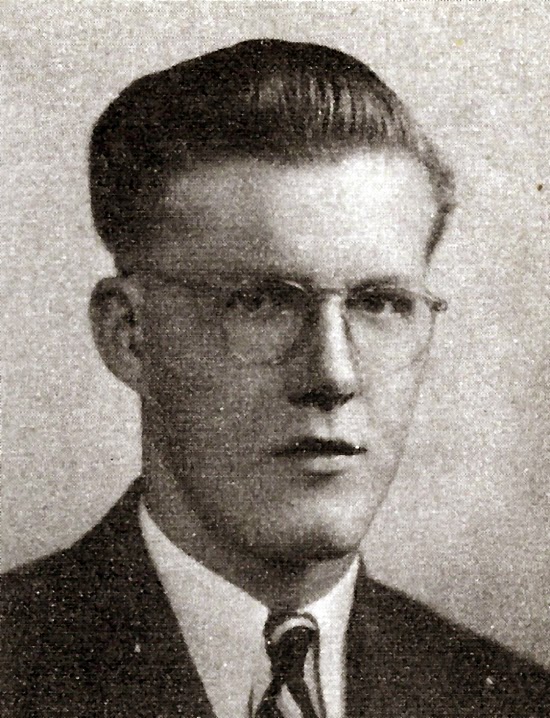
Fifty years ago this month, Rochester was mourning the death of Rochester native Sgt. William Eugene Jackson, who died from wounds suffered while serving in Vietnam on February 5, 1964.  The first Rochester resident to lose his life in the Vietnam War, Sgt. Jackson was the son of John W. and Elizabeth A. Jackson. He had deep roots in Rochester; his great-grandfather was William H. Jackson, who had established the Jackson Foundry at the south end of town in 1877.  William Eugene Jackson was a 1946 graduate of Rochester High School and had been a member of the United States Army since shortly after completing high school. He had also served as a radio instructor at the United States Military Academy at West Point, New York.

Sgt. Jackson was in Vietnam as a Special Forces senior military advisor to Vietnamese soldiers at a mountain camp north of Saigon. When the camp was attacked by an enemy patrol, Jackson ran out to investigate and someone threw a flare to illuminate the area. The Vietnamese soldiers in Jackson's camp,  apparently confused by the attack and the sudden light from the flare, shot him in a tragic friendly fire accident. Jackson was evacuated to Clark Air Force Base in the Philippines, where he died after a series of surgeries and blood transfusions failed to stabilize his condition.

Sgt. William E. Jackson of Rochester, first local fatality in the Vietnam War, was laid to rest with honor in Arlington National Cemetery.  May he rest in peace.

Thanks to Rod and Susan Wilson for providing the copy of William Jackson's RHS high school graduation photo that accompanies this post.

Saturday, January 25, 2014

Subdivision Stories: Hamlin Place Farms

The Hamlin Place Farms subdivision was laid out on the north side of Hamlin Road, straddling Rochester Road, in late 1916.  It was located on a portion of what was historically the John Fairchild Hamlin farm, a pioneer farmstead in Avon Township since the 1830s. The Hamlin farm at its peak encompassed more than 500 acres; after the death of John Fairchild Hamlin and his wife, Laura Andrus Hamlin, ownership of the property passed to his daughter Belle, who was the wife of Judge Marsden C. Burch.

The Burches did not live in Avon Township on a full-time basis. Marsden Burch was a judge in Osceola County, Michigan, and later located in Grand Rapids, where he was U.S. District Attorney for the western district of Michigan. In 1897, President William McKinley appointed him an assistant Attorney General of the United States, and he and his wife moved to Washington, D.C.  They visited Rochester regularly to look after their farm interests, which were managed by tenants, and to vacation during the summers in the old Hamlin homestead, which they affectionately called "Oldhome."

The Oldhome property was reserved for the Burches' use when they sold off portions of the old farm for development, and the Hamlin house in which they lived until their respective deaths still stands at 1812 S. Rochester Road. The one and only side street in Hamlin Place Farms ran north from Hamlin Road, west of Rochester Road, and was called Burch Street for the property owners; it was renamed Crestline in 1950.

This 1917 advertisement for the lots in the Hamlin Place Farms subdivision refers to this portion of Avon Township as "Rochester Heights." It also makes reference to deed restrictions which were fairly common during this era, usually prohibiting sale of lots to people of color or to people of certain religious beliefs. Deed restrictions based on race or religion were widely used to enforce segregation in the days before federal law prohibited such discriminatory practices.

Thanks to Rod and Susan Wilson for providing the Hamlin Place Farms advertisement shown here.

Saturday, January 18, 2014

Rochester Relics: The Elbe E. Robson Story

According to its label, this palm-sized antique bottle was once given out as a party favor during the 1901-1902 holiday season by E. E. Robson of Rochester, Michigan. The bottle is empty now, and not a trace of its former contents remains after 113 years, but we can be fairly certain that it once held holiday cheer in the form of liquor. Robson's back story as a player in a local controversy suggests no other possibility.

Elbe E. Robson was born in Michigan in 1865. He came to Rochester around 1899 to take over as proprietor of the Detroit Hotel, which stood on the southwest corner of Third & Main streets (where the Hermitage Gallery is today). The hotel was a handsome two-story brick building that boasted 30 guest rooms, a dining room, a bar and billiard lounge.

As one who made his living in the hospitality trade, Elbe Robson was an ardent advocate for the rights of saloonkeepers to sell liquor unfettered by government regulation. He apparently challenged such regulation early and often; Robson wasn't long in Rochester before he got himself into trouble with the law. According to a Detroit Free Press account from August 1900, he was one of four Rochester men fined for selling liquor without a license. In December of the same year, the Free Press reported in a dispatch from Pontiac that there had been more trouble:
The December term of the Circuit Court opened here yesterday afternoon and a lively session is promised. The criminals were arraigned at 1:30 p.m. Elbe E. Robson, of Rochester, proprietor of the Detroit Hotel, paid a fine of $200 upon pleading guilty to a charge of selling liquor on Sunday. He was also assessed $10 costs. On two other charges he was released on his personal recognizance in the sum of $300, in each case, until the February and April terms of court.
His hefty fines aside, E. E. Robson was in for a rocky ride in the first decade of the twentieth century. Back in 1889, Michigan had passed a liquor control law in Public Act 207, commonly referred to as the "local option" law. Under this act, individual counties were permitted to outlaw the manufacture and sale of intoxicating spirits within their borders upon a vote of the people, which could be petitioned for not more often than every two years. In Oakland County, agitation by temperance organizations was beginning to bubble to the surface right around the time that E. E. Robson was handing out these little bottles of cheer, but it was successfully beaten back by the "saloonists" until 1908.  In that year (the same one in which Carry Nation made her famous romp through downtown Holly), the temperance forces petitioned for a ballot question on the issue, and Elbe Robson stood in the gap to defend the saloonkeepers.

Elected as chairman of an executive committee of the county's saloonkeepers' organization, Robson traveled around advocating against the exercise of local option in Oakland County.  Just before the election, he gave an interview to the Bay City Times, which the newspaper summarized thusly:
E. E. Robson, proprietor of the Detroit Hotel at Rochester, and the most salient factor in the concerted movement instigated by the liquor element of Oakland County to oppose local option, was a guest of the Crawford today. This noon in a brief interview he outlined the situation as it now lies in his county, closing with the declaration that it would be a battle to the last ditch between the advocates of the licensed liquor traffic and the supporters of the local option cause.

As it turned out, Robson was right to be less than optimistic about the outcome of the election. His faction lost, and Oakland County went "dry" in the spring of 1908. The Detroit Free Press reported in late May of that year that Robson, weary of the fight, had closed the Detroit Hotel and moved to Richmond, Michigan.  Richmond was in Macomb County, which was still "wet," so Robson operated the Commercial Hotel there for two years, until 1910, when the temperance advocates were reversed at the polls and Oakland County went "wet" again.

This time, Robson went by the book and applied to the Rochester Village Council for a proper liquor license. The application was not without controversy, as opponents pointed out the proximity of the Universalist Church (at 226 Walnut) to the hotel. The hotel and the church did, indeed, share a property line, but measurements were taken and it was determined that the two buildings were precisely 400 feet apart, the minimum requisite distance under the law at that time, so the village fathers granted the liquor license.

The seesaw battle on the issue continued over the next several years, and Oakland went dry again in 1915. In 1918, statewide prohibition was voted in Michigan, and by 1920, the entire nation was (technically) dry. E. E. Robson threw in the towel and moved to Detroit, where he and his wife went into a completely different business and operated a millinery store.  He died in November 1933, exactly one month before national prohibition was repealed and liquor again became legal in the United States.

My thanks to Rod and Susan Wilson for the photo of the bottle that accompanies this post.

Saturday, January 11, 2014

At Home in Rochester: The William Henry Ducharme House

This Dutch colonial on Crooks Road, just north of Hamlin, has ties to the history of the American automotive industry. According to WPA rural property inventory records, the house may have been built about 1899, but the exact date is currently unknown. The house stands on the remnant of what was once a large farm parcel straddling Crooks Road and consisting, at times, of more than 200 acres.

The most interesting part of the property's history began in 1916, when it was purchased by William Henry Ducharme of Detroit. Ducharme was the son of Detroit hardware merchant Charles A. Ducharme, who was a partner in the Buhl & Ducharme hardware business and was also president of the Michigan Stove Company. William Ducharme was a talented amateur athlete and active member of the Detroit Athletic Club; he played first base for the D.A.C.'s baseball club, known as the Deltas. He was a member of that team when they won the national amateur championships in 1890 and 1892.

In business, William Ducharme had started out in the hardware trade, like his father, but in 1909 he became one of the three organizers of the Kelsey Wheel Company and was elected treasurer of the new firm. Kelsey Wheel got its start from Henry Ford, who purchased more than three-quarters of the company's wheel production in the first year. The company later expanded sales to other automakers and to the federal government during World War I, and by 1919 was producing two million wheels a year.  In 1927, Kelsey merged with the Hayes Wheel Company and formed what became the Kelsey-Hayes Corporation, a major supplier of wheels and brakes to the Big Three automakers.

With Kelsey Wheel making great strides in the industry, William Ducharme decided to invest in real estate. He purchased the Crooks Road property in 1916 from William McKinstrey and apparently used the house as a country escape.  The 1922 Detroit Social Secretary lists Ducharme and his wife, Frances, as residents of Jefferson Avenue in Detroit but notes that they maintained a "country home" in what they referred to as "Avon Hills."

Ducharme owned the Crooks Road property until 1943, a year before his death, but by 1939 he was apparently leasing the house for use as a convalescent home.  The Rochester Clarion reported on May 19, 1939, that the house was damaged by fire while so occupied:
The River View Rest Home, operated by Jerry Cummins and Robert W. Brennan at 1921 Crooks road, about 3 miles west and two miles south of Rochester, was badly damaged by fire, Monday afternoon, about 2:45 p.m., when a fire started in the attic of the house and before Rochester firemen could get it under control had burned the top floor of the sanitorium.
It is believed the fire was caused by sparks from a hole in the chimney. Firemen were handicapped in fighting the blaze for lack of water. The well on the property had gone dry and was being repaired by John Boldt, who gave assistance in getting the patients from the Home before help arrived. Firemen exhausted the chemicals in attempting to extinguish the blaze and a hose line was run 800 feet to the Clinton River and pumped to supply water.
At the time of the fire, nine patients were registered at the Rest Home. One of the women patients had suffered a stroke two days previous and had to be carried from the home. She was transferred in the A.C. Hobart ambulance to the Woodruff-Geiger Hospital. The other patients were taken to The Haven, another private sanitorium west of the village, and to the home of Mrs. Leila Mitchell on East Fifth street. Mrs. Mitchell is a nurse at the River View Rest Home.
The property is owned by William DuCharme, of Detroit. He will repair the home immediately for its continued use as a convalescent home.
 Another newspaper article a few months later reported that the house had been repaired and the rest home was back in operation, but after Ducharme sold it in 1943 it returned to service as a private residence.  Most of  the surrounding farm land was sold for development following World War II.

Saturday, January 4, 2014

The Story of Tyrrell H. Duncombe

This collectible old bottle has a connection to Rochester, Michigan and an intriguing back story. The product known as "Germex" was manufactured in Highland Park and Rochester, Michigan by Tyrrell Hubert Duncombe, who ran the Duncombe Research Laboratory in both locations from the late 1920s until his death in 1945.

Duncombe was born in Ontario in 1867, the son of a prominent physician and Canadian member of parliament. From 1889 until 1910 he was a pharmacist in St. Thomas, Ontario, where he also ran a real estate business.  Duncombe built the New Duncombe Opera House in St. Thomas and there exhibited the first motion pictures ever shown in Canada.

In 1910 he moved to Detroit, and by the late 1920s was a resident of Avon Township (now Rochester Hills), living on Washington Road.

Tyrrell Duncombe was a prolific inventor and was issued many U.S. and Canadian patents. Among them were patents for an acetylene gas generator in 1902, a coin-operated vending apparatus in 1910, a rotary internal combustion engine in 1921, and a traditional fuselage airplane with helicopter capabilities in 1930.

In addition to his mechanical inventions, Duncombe also styled himself  a cancer researcher, and he ran afoul of the U.S. Federal Trade Commission in 1935 when his claims that his Germex product was an effective treatment for cancer and other diseases fell under the agency's scrutiny. In a 1937 finding and summary of the investigation into Duncombe's case, the FTC cataloged the following claims that had been made by him in advertising for Germex:
Represented that cancer cures attained by said preparation were "beyond  all comprehension," and that it was a cure for syphilis, arthritis, pernicious anemia, and gangrene, and a remedy for tuberculosis, and that notable results were being obtained by use thereof in such diseases as cancer, sinus, catarrh, etc., and that it was used most successfully for various other diseases and was recommended for or effective in various other ailments, including kidney and liver trouble, pyorrhea, etc., and variously recommended same as a competent cure and remedy for everything that local doctors are called upon to treat and for any diseases caused by parasites or bacteria, and made use of circulars and other literature containing purported testimonials by various people to the effect that they had been suffering from cancer, ulcers and other diseases and had been relieved or cured thereof or completely restored to health by use of said preparation. . .
In his biographical entry in the National Cyclopedia of American Biography, Duncombe claimed that he had been graduated from "Ontario College of Pharmacy in 1889, M.D. at Rush Medical College, Chicago, in 1893 and D.C. at Chiropractic College, Detroit, Mich., in 1912."  The FTC investigation, however, took issue with his educational claims and described his credentials thus:
Although respondent is, or at one time was, a pharmacist, he is not registered as such in Detroit or Wayne County, Mich. Respondent never took a course in medicine and holds no degree in medicine. Respondent, however, in written communications prescribing and selling "Germex" has signed himself "Dr. T. H. Duncombe." Respondent explains that he uses the word or title "Dr." because he is a chiropractor. When questioned in regard to chiropractic, respondent was unable to state accurately the number of vertebrae in the spinal column.
The FTC further asserted in its findings that Duncombe had no substantive knowledge of the conditions that he claimed Germex could treat:
Respondent never read, nor could he give the name or title of any book on the subject of arthritis, anemia, syphilis, trench mouth, or scarlet fever. Respondent could name no book or article he had ever read on septicemia, gangrene, ulcers, diabetes, tuberculosis, or other diseases enumerated in his advertising material.
Notwithstanding the fact that respondent is not a doctor and is without medical education, he has not hesitated to consult with patients, to undertake to diagnose their troubles and to prescribe his product, "Germex" for them.
So what, exactly was Germex? The chemical analysis conducted by the FTC investigators found that:
Bacteriological examinations of "Germex" disclose that it is not an antiseptic, is not sterile and contains pathogenic or disease-causing bacteria.
. . .
Chemical analyses of a sample of ''Germex" as made by the Laboratories of the Detroit Department of Health disclosed the product to be a brown liquid, cloudy in appearance, with a yellowish residue on the bottom and a scum on the surface of the liquid standing in the bottom. The sample contained 8.18% of ethyl alcohol by volume, a deficiency of .82ff. had a musty odor, a slightly acid reaction, small amounts of resin and glucocides, total solids of .97'i of this .147, representing a composition of ash, largely sodium carbonate, and a trace of potassium carbonate.
Unimpressed, the FTC in 1937 issued a "cease and desist" order against Duncombe and the Duncombe Research Laboratory with respect to the sale and distribution of the product known as Germex. Tyrrell H. Duncombe died eight years later. He is buried in Mount Avon Cemetery.

Thanks to Rod and Susan Wilson for the photo of the Germex bottle.

Wednesday, January 1, 2014

This Month in Rochester History

As we turn the calendar page to 2014 today, we also look back at what was happening in Rochester half a century ago, in January 1964. The headline news in the Rochester Clarion at that time was the dedication of the new chapel at University Presbyterian Church on Adams Road, which took place on January 20, 1964. The congregation had been organized in 1958 and met in Lawnridge Hall, the former home of Donald C. Wilson, brother of Alfred G. Wilson of Meadow Brook Hall. Once their new chapel was dedicated, the congregation used Lawnridge Hall for administrative and educational functions. It is still a part of their campus today.

In its coverage of the dedication plans, the Clarion described the new building this way:
The chapel seats 180 people around three sides of a raised chancel supporting the pulpit and gleaming white marble communion table. From the skylit peak of the 40 foot ceiling, a celtic cross hangs suspended above the chancel. Behind the chancel, the choir is grouped around the Alfred G. Wilson Memorial Organ.
A few months after the building was dedicated, it was selected from among 275 entries as one of the top ten church building designs in the United States by the National Conference on Church Architecture.

Saturday, December 28, 2013

Bygone Business: Pierson's Floor Covering

The storefront at 410 S. Main Street received a new tenant in the spring of 1964, after having served more than three decades as the home of a shoe store (first Hale's, then Leinenger's). The new store was Pierson's Floor Covering, and it held a grand opening on April 3 and 4, 1964. Operated by Arthur C. Pierson, who had been in the floor covering business in Detroit, the shop sold duPont paint, Armstrong linoleum and carpeting.  To introduce his store to Rochester residents, Pierson offered a child's fishing pole and reel to the first one hundred customers to visit the shop on opening weekend. Pierson's closed around 1971, and the Rochester Eccentric newspaper offices replaced it at 410 S. Main in 1972.

The ad shown here ran in the Rochester Clarion in April 1964 to announce Pierson's grand opening. Do any of you have one of those kiddie rod and reel outfits stuffed in a closet somewhere?

Saturday, December 21, 2013

Subidvision Stories: Rochester Heights

The Rochester Heights subdivision was platted on former farmland northeast of the village of Rochester in 1956.  Since 1913, the 30-acre parcel that was subdivided had been part of the William Korff farm, and for most of the 19th century it was part of the large holdings of the Lysander Woodward family. Rochester Heights was part of a post-war building boom in the area that sought to meet overwhelming demand for housing as World War II vets who had finished their college degrees on the GI Bill looked to move into the northern suburbs. The Rochester Clarion announced the new subdivision in August 1956, reporting that the ranch homes in the development would be built by the Jack Hyman Building Company of Detroit, while sales would be handled by White Brothers of Waterford.

The opening of the home sales was done in a spectacular way. When the model homes were ready for public inspection, free helicopter rides were offered to show off the new development. The Clarion reported than more than 1,500 people turned out for the grand opening and about 150 took the aerial view:
About 150 persons took helicopter rides and there were rides on giant earth movers for the youngsters and refreshments for all.
Clarence Burr, village president, cut the ribbon at the door of one of the models to formally open the affair Saturday and for two days a steady stream of people moved though the models. Comment was high favorable and several homes were sold on the spot by White Brothers, of Waterford, who are handling sales.

Streets in the Rochester Heights subdivision are all named for trees. In 1957, an addition to the subdivision was made on the north end, connecting it to the existing North Hill Gardens subdivision via Red Oak Lane.

Saturday, December 14, 2013

Bygone Business: Buzzell Shop

It's hard to visualize today, but the former D & C building on the corner of Fourth and Main (occupied today by the Rojo Mexican restaurant) used to house more than one business in the space.  Tucked in to the back end of the building near the alley was The Buzzell Shop, a ladies' dress store located with the address of 113 W. Fourth Street. The business opened in August 1940 and operated for twenty years, closing in January 1960. It was operated by Neil D. Buzzell and his wife, Pearl, who lived in Bruce Township, near Romeo.

Here's a local newspaper ad from a 1951 issue of the Rochester Clarion, featuring a dress that was "big fashion news" for $14.95.

Saturday, December 7, 2013

At Home in Rochester: John B. Oliver House

Available evidence suggests that the brick Victorian house at 324 East Street was built about 1865 for a man named John B. Oliver. Oliver was born in France in 1794 as Jean Baptiste Olivier, and sailed with his family to America in 1828 aboard the ship La Leonarde. He settled in Rochester before the Civil War and owned a number of parcels of land on the east side of Main Street; in fact, on some early maps of the village, that which we know as East Street is marked as Oliver Street.

John Oliver was a cabinetmaker by trade, but the most interesting fact about his life comes from the 1877 History of Oakland County, Michigan, which tells us that he was one of only two veterans of the Napoleonic Wars living in the county at that time.

Oliver's house and lot on East Street was sold to Nehemiah and Mary Ralston, emigrants from Northampton County, Pennsylvania, in 1866. The Ralstons remained in Rochester only a few years and sold the house to local merchant Abram Horn in 1872. Horn, in turn, sold the house to James and Catherine Riggs, and following the Riggs family, the house was owned by Orestes Millerd.  For most of the early part of the twentieth century, however, 324 East was owned by the Hadden family, who purchased it in 1904. In 1944 the house was converted to a nursery school, thus ending its service as a private residence.

Oscar Sorenson bought the house in 1969, painted it blue, and operated it as a private museum and antique gallery called "Wedgewood Hall." Sorenson also built an addition on the back of the house to replace an old summer kitchen.  In the years since, the house has been the location of several small businesses, and is now the headquarters of Kosch Catering.

The John B. Oliver House is approximately 148 years old this year. More details about the history of the property are available on the Oakland Regional Historic Sites web site, here.

Sunday, December 1, 2013

This Month in Rochester History

Rochester Falconettes Parents' Club float, 1981 parade (courtesy of Clarence and Dorene Whitbey)
Fifty years ago this month, the citizens of Rochester were doing what they had been doing during the first week of December for over a decade - looking forward to the annual Christmas Parade. Next Sunday afternoon, the Rochester Regional Chamber of Commerce will present the 62nd annual Christmas Parade and a new generation of Rochester's families will be enjoying the tradition.  So now is the perfect time to look back at some Christmas parades past. Readers, I've pulled out a few vintage views to spark your memories. If you have Rochester parade photos in your own family collection that you'd like to share, e-mail them to rochesteravonhistory@gmail.com and I'll add them to the post for everyone to enjoy.  Add your memories of the parade to the comments section as well!
Bagpipers in Christmas Parade, ca. 1954 (Courtesy of Erv and Dorothy Bauer)

West Junior High band in the parade, ca.1967 (courtesy of Clarence and Dorene Whitbey)

Parade float, ca.1967 (courtesy of Clarence and Dorene Whitbey)

Saturday, November 30, 2013

Christmas Shopping in Rochester

This week's Black Friday-backed-up-into-Thanksgiving Day retail frenzy has given me pause to reflect upon the Christmas shopping habits of my family during my youth in Rochester. In our family, Christmas gifts were far from extravagant - a modest toy for a child, a useful object or item of clothing for an adult. That's not to say there weren't plenty of gifts under the tree in my family home - there definitely were. It's just that my parents, and the parents of others I knew, didn't go into hock for the rest of the year to underwrite their holiday largesse. Purchases weren't funded with credit cards; most families in my circle of acquaintance probably didn't even possess such a thing, except perhaps for a Kresge's revolving charge card. Instead they planned ahead and set money aside; sometimes with Christmas Club bank accounts, or with layaway plans that allowed them to make payments for merchandise over several weeks.

Downtown Rochester's holiday season kicked off with Window Night and the outdoor decorations consisted of candy canes mounted on the light poles and swags of colored lights festooning the street. A set of three large red bells hung suspended over each intersection and the lights inside the bells moved from left to center to right and back again. We thought those lights were pretty spectacular but they paled in comparison to the Big Bright Light Show that we see today.

Going to a shopping center in those days was rare treat. Most of our family's shopping was done on Main Street, Rochester, or in the stores in the North Hill Shopping Center. My parents most frequently visited Kresge's and Cunningham's on North Hill, along with D & C and Case's Hardware on Main (Case's had a great toyland that I remember fondly). When it was necessary to search further afield than Rochester for gifts, we usually took a family trip to Pontiac to visit the Sears store there. Being accustomed to the small shops of my hometown, I was overwhelmed by the seemingly enormous department store. Today, I am overwhelmed by the numbers of people who camp out in parking lots for days in order to be first in line to  to purchase the latest and greatest electronic gadget that will be hopelessly outdated before the next holiday season rolls around. Such spectacles make me positively nostalgic for simpler days.

Do you have Christmas shopping memories of Rochester?

Saturday, November 23, 2013

Subdivision Stories: Blackett's Floral Gardens

This tiny subdivision of only nine lots is located on the west side of John R Road between Avon and Hamlin. Known as Blackett's Floral Gardens, it was platted in 1942 by Russell and Beryl Blackett, owners of the land in Section 23 of Avon Township upon which the development was laid out.  The Blacketts were married in 1929 and settled on the property along John R soon afterward. They operated a greenhouse business called Blackett's Floral Gardens, and trucked their product to Eastern Market in Detroit and to a farm market in Pontiac.  They also operated a retail florist shop in downtown Birmingham for a time.

When this subdivision was platted in 1942, it was appropriately named Blackett's Floral Gardens in recognition of the family business that was located there. The only street in the subdivision is Beryl Court,  named in honor of Beryl Blackett. Russell Blackett's son, Larry, remembers that his father personally built four or five of the houses in the small development.

In 1943, the Blackett family left Avon Township for Marlette, Michigan, where they continued their greenhouse and floral business. In 1952, they moved to Clarkston and operated a lumber yard near the intersection of Dixie Highway and today's I-75.  Today, the children and grandchildren of Russell and Beryl Blackett continue to work in the building industry as Blackett Builders.

My thanks to Larry Blackett for sharing the details of his family's business history with me.

Saturday, November 16, 2013

Bygone Business: Deaton's Marathon Station

Deaton's Marathon, looking south toward Univerity, 1977
When I was growing up in Rochester, there were more gas stations along Main Street that there are today. One of those stations, now long gone, was Deaton's Marathon, located on the west side of North Main just south of what was then the Dillman & Upton lumber yard. Today, this location would be part of the Rochester Medical Center development.

Deaton's Marathon was one of several local businesses operated by W. "Joe" Deaton, a 1951 graduate of Rochester High School.  Joe Deaton was well known in the community and served as a member of the volunteer fire department, the Shriners, and the American Legion Homer Wing Post. He died in 2002.

I remember visiting Deaton's Marathon as a child, and I particularly recall going there to collect the promotional glassware that Marathon gave away to commemorate the Apollo space missions during the late 1960s and early 1970s.  Does anybody else still have a full set of this fine drinkware in the back of the cupboard somewhere? There are probably many
thousands of examples out there, but all of mine came from Deaton's Marathon on Main Street in Rochester, Michigan.  Those were the days!

Saturday, November 9, 2013

At Home in Rochester: Albert C. Steadman House

The house at 133 S. Walnut was built in 1891 as the family home of Albert C. Steadman and his wife, Alice Woodworth Steadman. The Steadmans purchased the lot on Walnut from Eliza Newberry in June 1891, when they retired from farming and decided to move into the village. They broke ground for their new house in August 1891.

Alice Steadman died in 1913 and Albert remarried and moved to Bloomfield Township. After the Steadmans, the house was occupied in 1920 by Delos R. Harrington and his wife, Louise. Harrington, a foreman at the Western Knitting Mills, built a new house at 118 S. Walnut in 1929 and the couple moved across the street at that time. In 1930, the Louis C. Harris family lived in the former Steadman home.

Probably the best-known of the residents of 133 S. Walnut was Dr. Ormond Daniel Geib. Dr. Geib studied at the University of Michigan before receiving his medical degree from the Detroit College of Medicine in 1924. He came to Rochester to establish his medical practice in 1932. He and his wife, Jessie, occupied this house for many years.

The Steadman house is 122 years old in 2013.

Saturday, November 2, 2013

Dr. Mille E. Wilson and the Wilson Medical Dynasty

At the turn of the twentieth century, women physicians were fairly uncommon outside of  the country's largest cities, but the small villages of Stoney Creek and Rochester, Michigan could lay claim to two of them. The story of a daughter of Stoney Creek, Dr. Bertha Van Hoosen, is well remembered here, but Rochester's woman physician, Dr. Mille E. Wilson, is little known these days.

Amelia Elvira Wilson, known as Mille, was born in Avon Township in 1876, the daughter of Dr. Jesse E. Wilson and his wife, Susan Richardson Mack. Her father, Jesse, along with his twin brother, Jeremiah "Jerry" Wilson, had practiced medicine together in Rochester since before the Civil War. The twin brothers had grown up in Ontario, the sons of American parents, and had studied medicine at the University of Michigan and Bellevue Hospital Medical College before earning medical degrees from Castleton Medical College in Vermont. Together, they came to Rochester and established a joint medical practice which lasted for half a century, until the death of Jeremiah Wilson in 1906.

Mille Wilson first attended college in St. Thomas, Ontario, were her father and uncle had once lived, and then went on to study at Lombard University in Galesburg, Illinois before earning her medical degree from the Michigan College of Medicine and Surgery in Detroit in 1903. She first served as a house physician at the Detroit Emergency Hospital, but when her uncle Jerry Wilson died in 1906 she resigned her post and returned home to Rochester to assist her father in his practice.

A year later, she was appointed assistant physician at the Michigan Home for the Feeble-Minded and Epilepetic at Lapeer (later known as the Lapeer State Home and Training School). She would hold that position for the next 41 years, until her retirement in 1948.

Dr. Mille Wilson was known as something of a pioneer. Not only was she a women in a male-dominated profession, but she was believed to be the first woman automobile driver in Lapeer County. Furthermore, at the age of 70 she took pilot lessons at a Flint airport.

Following her retirement in 1948, Mille Wilson moved to Plainwell, Michigan, to live with a friend. Although she died in Lapeer in 1957, she was buried in Plainwell near her friend rather than in Lapeer or Rochester.

An obituary of Mille's father, Dr. Jesse Wilson, which was published in The Canada Lancet at the time of his death in 1913, claimed that Jesse Wilson was descended from family that boasted several eminent physicians, although their names were not specifically noted. In addition to those in her father's lineage, however, Mille also had at least one physician ancestor in the lineage of her mother, Susan Richardson Mack. According to Mille's membership record in the Daughters of the American Revolution, she was the great-great-granddaughter of American patriot Stephen Powers, who served as a soldier and surgeon attending the wounded at the Battle of Bunker Hill.

Thanks to Rod Wilson for the newspaper feature about Mille Wilson which included the photograph show here.

Friday, November 1, 2013

This Month in Rochester History

November 1963 is remembered in Rochester history in much the same way that it is by people across the nation. Fifty years ago this month, Rochester residents were stunned and saddened by the assassination of President John F. Kennedy. Under a banner headline that read "Rochester Bows Head in Sorrow for Fallen President," the Rochester Clarion reported in part:
Suddenly, the streets were empty. It was an overcast, partially rainy early afternoon in Rochester when word was flashed by radio and television that President John F. Kennedy had been struck down by an assassin's bullet while riding down a Dallas street.
. . .
In the National Bank of Detroit office here, a radio was turned on. The customers and personnel froze as the death was announced and the National Anthem was played. Businesses suddenly found their stores almost empty.

The article went on to say that a variety of local events were cancelled or postponed over the weekend that followed the president's death. A turkey drawing by downtown merchants, a hootenanny at the high school, and the Illinois-Michigan State football game at East Lansing were among the activities that did not take place.  What did take place were special local church services on the day of the funeral.  The Clarion continued with its description of local observances:
Schools were closed Monday. There was no mail delivery and all federal and local governmental offices closed their doors. A black drape hung over the front entrance of the Municipal Building. Monday night was the regular meeting of the Village Council. A proclamation by Council President was read and the meeting was quietly adjourned until Tuesday night.
. . .
It was a remarkable and most tragic weekend.

Saturday, October 26, 2013

St. Andrew's World War II Honor Roll

During World War II, the members of St. Andrew Catholic Church assembled this honor roll to recognize those from the parish who were serving their country in uniform. In all, 120 names were added to the plaque that hung in the church until the building was demolished on July 24, 1972.  Parish member Reid Hanlon, whose name was on the honor roll along with those of his brothers, rescued the plaque from the rubble heap and took it home.  After his death, the honor roll passed into the custody of his grandchildren, who recently decided to donate it to the Rochester-Avon Historical Society.

RAHS members Rod and Susan Wilson spent many hours cleaning and repairing the wood and repainting the letters to restore the honor roll to a condition which allows it to be displayed. RAHS hopes to have it  placed in a local museum eventually, but for now it will be on display this weekend at St. Andrew Catholic Church during the 100th anniversary celebration of the parish. For a list of all of the names on the St. Andrew World War II Honor Roll, click here.

Saturday, October 19, 2013

At Home in Rochester: Pearl John O'Brien House

P.J. O'Brien house as it looked in 1907
 The house on the northeast corner of Fourth and East streets in downtown Rochester was built in late 1903 by Charles A. Burr, who also built the opera house block at the corner of Fourth and Main (where Lytle Pharmacy is today). The Rochester Era reported in late 1903 that Burr had purchased the Barley lot at Fourth and East and was having a foundation laid for a house. In March 1904, the newspaper  remarked that lumber dealer P. J. O'Brien had purchased the newly-built house from Burr, was making an addition to it, and would be occupying it as a family residence.

O'Brien was born in Oakland County in 1875, and was a prominent business and civic leader in Rochester. He established a lumber and coal yard on Water Street in Rochester in 1899 (the business later became known as the Nowels Lumber Yard). He was also a stockholder and second vice-president of the Rochester Savings Bank, and vice-president of the Rochester Development Company, which was formed in 1919 to bring new industry to the village. He served as secretary of the Rochester Fire Department, as village clerk and village treasurer, and as a member of the board of education.
P. J. O'Brien house as it looked in 2013

An interesting aside: O'Brien disliked his given name, Pearl, so later in life he went to court to have it legally changed to Peter. He was commonly known as P. J.

In the 1970s and 1980s, the former O'Brien residence was the home of the Heart of the Hills Resale Shop. Today it is the location of Marie's Salon and Spa.

Saturday, October 12, 2013

Bygone Business: Club Rochester

According to this newspaper advertisement for Club Rochester, fine dining in 1964 cost a princely $1.95 per plate. Club Rochester was located at 306 S. Main, on the site of today's Rochester Chop House. The popular restaurant and lounge opened at this location in the mid-1950s, succeeding the Hopkins Bar and before that, Harry's Cafe.  Club Rochester came to a sad and abrupt end on July 28, 1970, when the building was completely gutted by a four-alarm fire that started in the kitchen.   The Brooklands, Avondale and Troy fire departments were called in to assist the Rochester Fire Department in fighting the blaze, which attracted onlookers from all over town. The fire threatened the adjacent buildings and sent several fire fighters to the hospital, but was successfully contained with the help of Troy's aerial truck. The remnants of the old structure were demolished and a new restaurant, Cooper's Arms, was built at the location.

Saturday, October 5, 2013

Pioneer Farmsteads: John Martin Wilcox Farm

Avon Township pioneer John Martin Wilcox built this handsome farmhouse on East Avon Road as his family home around 1860. Here Wilcox farmed and raised horses on a 170-acre parcel. He and his wife, the former Maria Amelia Bennett of Macomb County, reared a family of thirteen children, two of whom died in infancy.

John M. Wilcox was born in Ontario County, New York in 1819 and came with his parents to Avon Township in 1832, when he was thirteen years old. His father settled on the land in Section 14 where the Wilcox farmhouse still stands, but it was John M. Wilcox who built the house after his marriage to Maria Bennett. It is said that timber on the property was harvested and sent to Pontiac for milling, then returned to Rochester to be used in the construction of the house.

The John M. Wilcox house is one of only a handful of Rochester Hills homes that pre-date the Civil War.

Tuesday, October 1, 2013

This Month in Rochester History

439 S. Main in 1998 (Rochester Hills Public Library)
439 S. Main under renovation in 1999 (Rochester Hills Public Library)


Fifty years ago this month, residents of Rochester were watching a brand-new building go up on Main Street. Joseph Watson of the Watson Insurance Agency built a modern two-story office building on the southwest corner of University and Main, on the site where the old St. James Hotel (earlier known as the Lambertson House) had stood from 1847 until its demolition in 1962. Robert C. Smitha was the architect of the new structure, which housed a real estate firm and a medical office for a number of years. The building was much smaller in 1963 that it is today; it was expanded westward to the alley in the 1999 and almost tripled in size. In recent years it has housed a Starbucks coffee shop on the first floor and is currently home to the Bean and Leaf Cafe, and several offices.

Saturday, September 28, 2013

Subdivision Stories: Parkdale Heights

A small subdivision lying south of Parkdale Road between Elizabeth and Lounsbury streets was laid out as an addition to the Village of Rochester in November 1917.  The proprietors of the subdivision were two Rochester couples: Richard D. and Mary Watson and Alfred E. and Elizabeth Williams. The former farm land along Parkdale Road was quickly developed between 1915 and 1925 and many of the houses built on Parkdale and the adjacent side streets were occupied by employees of the Parkedale Biological Farm just east of the village.

The land on which the Parkdale Heights subdivision was created was formerly owned by Robert J. Lounsbury, an attorney and real estate developer who served as mayor of the City of Pontiac. After earning his degree from Columbia Law School in 1875, Lounsbury had come to Michigan to represent the interests of East Coast capitalists who had investments in the Midwest. In addition to the Lounsbury street that bears his name in Rochester, there is also a Lounsbury Avenue in Pontiac.

Saturday, September 21, 2013

Yates Cider Mill Marks a Milestone

Yates Cider Mill owners Mike and Katie Titus receive a Michigan Milestone award from a representative of the Historical Society of Michigan
This afternoon at Yates Cider Mill, the Historical Society of Michigan recognized Rochester Hills' oldest continuously operating business with a Michigan Milestone Marker. The plaque honors the mill for 150 years of service.

William H. Yates emigrated to Michigan from New York and established his mill on the Clinton River in 1863, in the middle of the Civil War.  The original structure was a grist mill, but Yates decided to begin pressing apple cider thirteen years later,  in 1876.  In 1894, the Yates family built a new structure to house the thriving business, and the iconic building that we know today was used to press apple cider that fall.


William Yates' son and grandson followed him in the business, and in 1959, Yates' grandson, Harry, sold the mill to the Posey family, who still own and operate it today.  Several generations of area residents have fond memories of autumn trips to Yates Cider Mill, and this year the atmosphere is especially festive as the mill observes the sesquicentennial anniversary of its founding.  We think William H. Yates would be proud!

Saturday, September 14, 2013

At Home in Rochester: Milton Henry Haselswerdt House

This lovely home on North Main Street stands in testimony to Rochester's share in the prosperity of the decade known as the "Roaring Twenties." The house was built  in 1928 as the family home of Milton Henry Haselswerdt and his wife, Augustine Blanchard Haselswerdt.  The Rochester Era described the progress on the house in October 1928:
M. H. Haselswerdt, president of the First National bank, who is building a fine new 12-room home, is nearing completion. The house is of colonial design, with exterior walls of buff brick and tile roof. The colonial entrance and arched windows add much to the attractiveness.
Milton Haselswerdt was born in Washtenaw County in 1882. After completing high school, he attended business school in Ypsilanti before taking a position as an assistant cashier at a bank in St. Ignace. He moved to Rochester in 1908, where he helped to organize the First National Bank of Rochester, serving at first as cashier and eventually rising to the position of president of the bank.  He was vice-president of the bank at the time that it built a modern new facility on the southwest corner of Fourth & Main, the building that houses Chase Bank today.

The Haselswerdts moved into their new home only months before the stock market crash of 1929 changed the economic fortunes of the nation.  Milton H. Haselswerdt was best remembered for bringing the First National Bank of Rochester out of the 1933 bank crisis in reorganized form, as the Rochester National Bank. This bank was the only one in Rochester to survive the Great Depression with no harm to depositors. It later merged with National Bank of Detroit, and Haselswerdt stayed with NBD as a director of the Rochester branch, retiring in 1957. He died in 1976 and  was entombed at White Chapel Cemetery in Troy.

Sunday, September 1, 2013

This Month in Rochester History

Honor Roll moving in 1963 (Rochester Hills Public Library)
Fifty years ago this month, Rochester leaders were contemplating what should be done with the community's World War II honor roll, which had fallen into disrepair and was standing in the way of a proposed urban renewal project.

In 1963, the honor roll was located on the east side of Main Street at Second; Second street had not been opened east of Main at that time. The village was preparing for an urban renewal project on the east side of Main, encompassing the area occupied by the former Chapman Mill Pond (which had been washed out in 1946) and adjacent property.  Part of this plan was to open Second Street east of Main.

The village fathers and the Blue Star Mothers, who had originally sponsored the creation of the memorial, contemplating moving the memorial to the municipal building grounds, as this article from the September 26, 1963 issue of the Rochester Clarion reported:
Township treasurer Helen V. Allen, representing the Blue Star Mothers, addressed a letter to the Council asking them to consider a spot for the memorial on the Civil Center grounds.
The memorial is now located on Main St. across the road from the eastern end of Second. Because the names are etched on glass, some of the panels are broken and the memorial in general is in poor condition. It is believed that stones thrown up by passing cars have broken the glass panels.
Mrs. Allen said this week that the Blue Star Mothers have brought a glass company person to Rochester to look at the memorial and it is estimated it will cost $600 to repair the memorial. It will cost an unestimated amount to move the memorial. She said that the Blue Star Mothers will ask other organizations and individuals to help them finance the project.
Honor Roll at re-dedication in 2002 (Rod and Susan Wilson)
The planned move to the municipal building grounds did not happen in 1963. Instead, the honor roll was removed from its site at Second Street and dismantled. The broken panels were stored away in a garage and not seen again for several decades, until the Rochester Avon Historical Society adopted the honor roll as a historic preservation project and restored it.  At a cost many thousands of dollars greater than the estimate of 1963, the memorial was returned to its former glory and given a place of honor on the grounds of the Rochester Municipal Building in 2002. It was re-dedicated on Memorial Day of that year with many local World War II veterans in attendance.

If you haven't visited Rochester's World War II Honor Roll, be sure to take time to stop by the Municipal Building to view this memorial to the more than 1,100 men and women from the community who served in uniform during World War II.  Among the names listed are 26 preceded by gold stars, denoting the ultimate sacrifice in defense of freedom.


Saturday, August 31, 2013

At Home in Rochester: Erastus H. Sipperley House

Tucked away from the hustle and bustle of the community at the end of Bloomer Road is this handsome brick Victorian, originally built as the farm home of Erastus H. Sipperley.  Today, the house stands upon the remnant of what was at one time a one hundred acre farm.

The Sipperley family came to Oakland County from New York in 1835, while Michigan was still a territory. John and Elizabeth Sipperley made their home in Troy Township, where their son, Erastus H., was born in 1836. Erastus worked on his father's farm until August 1862, when he entered service in the Union army with the 22nd Michigan Volunteer Infantry.  His regiment was assigned to the pursuit of the Confederate general Braxton Bragg, and suffered heavy losses at the battle of Chickamauga, but Sipperley himself escaped harm and returned to Oakland County at the close of the war.

In 1870, Erastus Sipperley married Annette Evritt and moved from his father's farm to a parcel of land in section 13, Avon Township, where he built the house shown here as a family residence.  The couple reared eight children here.
Erastus Sipperley house as it looked in 1907

An 1891 local history book entitled Portrait and Biographical Album of Oakland County, Michigan had this to say about the Erastus Sipperley farm:
One of the most attractive farms in Avon township is owned and occupied by this gentleman [Erastus Sipperley] .  The home place consists of one hundred acres, which are cultivated in a careful and intelligent manner and have their fertility kept at par by a  judicious rotation of crops and the use of drainage of fertilizing agencies when  necessary. A complete line of farm buildings stands upon the estate, modern machinery is in use during the season of planting and reaping, and the stock of high grade grazes in the pastures.  The dwelling is of unusually pleasing design, is a model of neatness and comfort, and in its surroundings gives evidence of the refined taste of the family.  It was built in 1885. 
 Erastus Sipperley died in 1920 and is buried in Mount Avon Cemetery.  His home on Bloomer Road is 128 years old this year.

Saturday, August 24, 2013

Ford Photographic Farm

A 1964 Rochester Clarion photo of promotional photography being done at the Ford Photographic Farm on the former Ferry-Morse Seed Farm property.
If you're watching closely, you've seen glimpses of downtown Rochester in the background of some recent automobile commercials on television, and Michigan's film program has brought a number of location shoots to our area over the past few years.  But if you think using Rochester as a film backdrop is a new development, think again!

In May 1963,  Ford Tractor & Implement Operations leased 717 acres of the former Ferry-Morse Seed Farm lying east of Rochester Road and south of Hamlin from then-owner Howard L. McGregor.  The property was, at that time, a real working farm that was part of McGregor's Great Oaks Stock Farm holdings.  Ford Tractor was looking for property within a reasonable distance from its Birmingham offices on which to shoot photographs of its equipment in authentic farm situations, and the former Ferry property was the best candidate because of its size.

Loyce Snyder of Rochester was the supervisor of the photographic section of Ford Tractor's advertising and sales promotion department, which operated the Ford Photographic Farm.  Photos taken at the farm were used in sales brochures and national print advertising campaigns, but the company also shot about a dozen motion pictures at the site each year. Some backdrop shots were also taken in and around the village of Rochester.  These films were used for sales training or product demonstration purposes nationwide.
A 1964 national ad campaign for Ford used downtown Rochester looking north from Third Street as a background. The town was not identified in the ad, but everybody from the "Heart of the Hills" recognized their hometown.

Few people knew much about what was happening at the Ford Photographic Farm because it was not open to visitors, but examples of its work can be found in vintage Ford Tractor ads.  Tractor lovers, if you've got any 1960s-era promotional literature stored away, be sure to look for glimpses of the Rochester area in the photo backgrounds. You may see something you recognize!

Saturday, August 10, 2013

A Distinguished Visitor

Near the end of World War II, the Rochester community was visited by a world-renowned figure, but few people in town knew about the event until it was over.  On June 15, 1945, the Parke-Davis Biological Farm on Parkdale Road was toured by none other than Sir Alexander Fleming - the man who had discovered that penicillium fungi, when properly cultured, would produce a substance with antibiotic properties.  Fleming's 1928 discovery led to the development of the penicillin family of antibiotics just in time for them to be used as a life-saving treatment for soldiers injured during the Normandy invasion in World War II.

The Rochester Clarion told the community that Fleming had visited them in the issue of June 21, 1945. The newspaper said in part:
Few people in Rochester were aware last Friday afternoon, of a most famous visitor in our midst, Sir Alexander Fleming, the discoverer of penicillin, who spent an hour visiting the Parke Davis Biological farms, east of the village.
. . .
From the people who saw this famous man, last Friday, he impressed them that he didn't consider himself as great. In fact he looked and acted very much like a hard-headed little Scot who is very much perturbed over the great ado being made over him.
A most interesting description was given of him by Malcolm Bingay in his recent column in the Detroit Free Press from which we quote: "By chance I left the farm where my people still are, by chance I got a clerkship in a steamship line, by chance I entered St. Mary's Hospital Medical school, by chance I discovered penicillin. All life is chance."

After concluding his tour of Parkedale, Fleming and his secretary returned to Detroit where they visited Henry Ford Hospital.  Fleming and two other scientists were awarded the Nobel Prize in Physiology and Medicine for their work with penicillin later that year.

Sunday, August 4, 2013

Bygone Business: The Food Tray

How many Remembering Rochester readers recall this little delicatessen and party store, tucked into the back of the building on the northeast corner of Second & Main streets?  The Food Tray opened at that location in June 1957, and was originally owned and operated  by Mr. and Mrs. Frank Bozynski.  Raymond and Lillian Brinker later owned the business, which operated in the same location at 204 S. Main until the mid-1980s.

This photo of Mr. & Mrs. Bozynski in their new store was published in the Rochester Clarion in 1957 to announce the grand opening of the business.

Thursday, August 1, 2013

This Month in Rochester History

Plans for a new building on the corner of Oak Street and West University Drive were occupying the attention of Rochester residents fifty years ago this month.  In August 1963, Pixley Funeral Home unveiled drawings for a new, Colonial-style building designed by architect Edward J. Heins of Rochester.  The new building would be state-of-the-art, with five reposing rooms on the first floor and an eight-car garage in the rear.

Pixley Funeral Home has deep roots in Rochester going back more than a century. The business traces its origin to the Thomas E. Nichols funeral home started here in 1910. Vern Pixley joined the Nichols business on January 2, 1918, and later acquired a half interest in the company.  In 1954, the firm was incorporated as the Pixley Funeral Home.

Saturday, July 27, 2013

Vanished Rochester: Posey's Isle

Posey's Isle as it looked in September 1958 (Courtesy of Yates Cider Mill)
This popular drive-in known as Posey's Isle was located on the southwest corner of Avon and Dequindre roads. It was built in 1942 by Charles M. Posey, who purchased the land from the Yates family and built the restaurant for his wife, Ruth Renwick Posey.  The Poseys,  who bought the Yates Cider Mill from Harry L. Yates in 1959, sold Posey's Isle in that same year but bought it back during the 1970s, and operated it until the mid-1980s.

The little drive-in was torn down just a few years ago. Yates Cider Mill is going strong, however  -  still operated by Posey family members. The business is about to celebrate its 150th year of existence and its 137th year of pressing cider.  And although Posey's Isle has passed into the pages of Vanished Rochester, Yates Cider Mill still offers a very tempting menu of delicious treats in the tradition that Ruth Posey started in 1942.

My thanks to Mike Titus and Hannah Springer of Yates Cider Mill for lending the photo and providing the history of Posey's Isle.

Saturday, July 20, 2013

Bygone Business: Hayward Bowling Alley

If you ask long-time Rochester residents about bowling on Main Street, they will probably tell you that they patronized the bowling alley in the basement of the Whims building, which was built in 1926.  But this newspaper advertisement from September 1903 shows us that there was a bowling alley on Main Street long before the one in the Whims building opened.

The Hayward bowling alley was located in a building on the southwest corner of Fourth & Main streets, on the lot where the Chase Bank stands today.  (The building was torn down in 1924 when construction of the bank building commenced.)  Nothing much is known about proprietor Daniel Hayward. It seems that he and his bowling alley didn't last long in Rochester.

Saturday, July 13, 2013

Movers and Shakers: C. Lawrence "Larry" Jerome

If you were living in Rochester in 1970 or earlier, you probably recognize the name of Larry Jerome, who was a prominent business and civic leader in the community for over 40 years. Known as the owner of Larry Jerome Ford Sales and Service which was located for decades at 215 S. Main, Jerome was also a charter member of the Rochester Kiwanis Club and served terms as president of the board of education and chamber of commerce.

A lengthy interview with Larry Jerome was published in the August 6, 1937 issue of the Rochester Clarion, and relates a very interesting life story.  Jerome was born in 1901 in Detroit, Michigan, the son of John Jerome and Eva Ireland. He attended high school in Detroit, but visited Rochester with his friends at the age of fourteen, when the group of boys took a canoe trip along the Clinton River from Pontiac to Lake St. Clair.  The Clarion reported:
...four weary boys, who had paddled their canoe down the Clinton river a long, tiresome day, brought their boat to rest where the river passes through Rochester and prepared to camp for the night.
'Gee, this is a pretty town,' exclaimed one of the lads, after they had set up their tents and were looking over the village, 'I'd like to settle down and live in a town like this someday.' But Charles Lawrence Jerome, the fourteen year old boy who liked the looks of Rochester, known today as "Larry" Jerome, popular Ford dealer here, little imagined that only seven years later he would be settling down in Rochester and embarking on his life work of selling and servicing automobiles to residents here and throughout the countryside.
The seven years that passed between Jerome's canoe trip to Rochester and his arrival here as an adult businessman were busy ones.  He enlisted in the U.S. Navy while still underage and spent a summer cruising the Great Lakes on a naval training vessel.  He was quickly discharged as ineligible for duty when World War I broke out.  He finished high school and enrolled in college where he participated in the Students' Naval Training Corps at the University of Michigan, but never saw active service before the war ended.

After leaving college, Larry Jerome found his first job in the automobile industry, working for a used car dealer in Detroit. Jerome's job was to travel the countryside buying used cars for resale. One of the firms he regularly called upon was the Phillips & Bailey Ford dealership in Rochester. After he married in 1921, Larry Jerome decided that he would have better business opportunities in a small town than he would in a city as large as Detroit, so he went to work as a salesman for Phillips & Bailey in the town he had admired when on his canoe trip seven years earlier.  In 1924, when W. J. Bailey was offered the Ford dealership in Romeo, Larry Jerome bought his share of the Rochester dealership and it became known as Phillips & Jerome.  Not many years later, Jerome bought out his partner, O. N. Phillips, and Larry Jerome Ford was born.

In his 1937 interview with the Clarion, Larry Jerome gave his perspective on what made a successful auto dealership:
'The success or failure of an automobile agency,' says Mr. Jerome, 'does not depend on the front office or salesrooms. In the long run the success of an automobile dealer depends on how his back shop is operated.  The first thing that attracted me to Ford, even before I entered the automobile business, was the fact that Ford insisted, not only in selling cars at a low price, but also that his dealers be equipped to make necessary repairs as efficiently and as economically as possible. If, after you sell a customer an automobile, you are able to keep his car running satisfactorily at a minimum expense, you are pretty certain to sell him his next car.'

Larry Jerome operated his very successful Rochester dealership until the mid-1960s, when he sold the business to Jack Long. The McKenzie Ford dealership followed Long, and moved the dealership out of downtown to South Hill.  Larry Jerome died in 1971.

In the 1957 promotional photo shown here, Larry Jerome (right) and his son, Dick Jerome, are looking at a new Ford Skyliner with Jim Scolaro and Mickey Niles.

Saturday, July 6, 2013

Subdivision Stories: Hitchman's Haven Estates

The subdivision known as Hitchman's Haven Estates was platted in the southeast quarter of Section 8 of the former Township of Avon (now Rochester Hills) in 1952.  Detroit real estate broker Thomas A. Hitchman and his wife, Ada Lillian Sternbridge Hitchman, developed the subdivision that bears their name; they included the name "Haven" in a nod to the Haven Sanitarium that lay adjacent to their property immediately to the east.  The streets in the original Hitchman's Haven Estates development were named for the western states of Texas and Nevada.  The Hitchmans expanded the subdivision in 1953, adding the streets of Arizona and Oklahoma, and again in 1955, adding a fifth street named Colorado.

An interesting side note about this property is that before the Hitchmans acquired it for development, the parcel was owned by Beryl Harnett Schuyler Kahn, who was the wife of Detroit architect Louis Kahn (not to be confused with the famous Estonian-born architect Louis I. Kahn of the Yale School of Architecture).  Detroit architect Louis Kahn was the brother of renowned industrial architect Albert Kahn.

Monday, July 1, 2013

This Month in Rochester History

Fifty years ago this month, a group of Rochester citizens traveled to Pennsylvania to join historians and re-enactors in a centennial observance of the anniversary of the Battle of Gettysburg.  Rochester police sergeant Raymond Russell (himself a Civil War historian) along with his son, Brian, and another local family spent a week in an encampment near the famous battlefield.  Dressed in Union blue, they participated in battle re-enactments and the re-dedication of two of the memorials located there.

This week, thousands of visitors will be in Gettysburg to commemorate the 150th anniversary of the pivotal battle. Click here for information about the events that will be unfolding in the next few days.